How Encryption Protocols Coordinate Real-Time Fund Transfers and Interactive Table Participation in Multi-Region Digital Gaming Networks
Written by Blake Russell · Sep 13, 2026
How Encryption Protocols Coordinate Real-Time Fund Transfers and Interactive Table Participation in Multi-Region Digital Gaming Networks
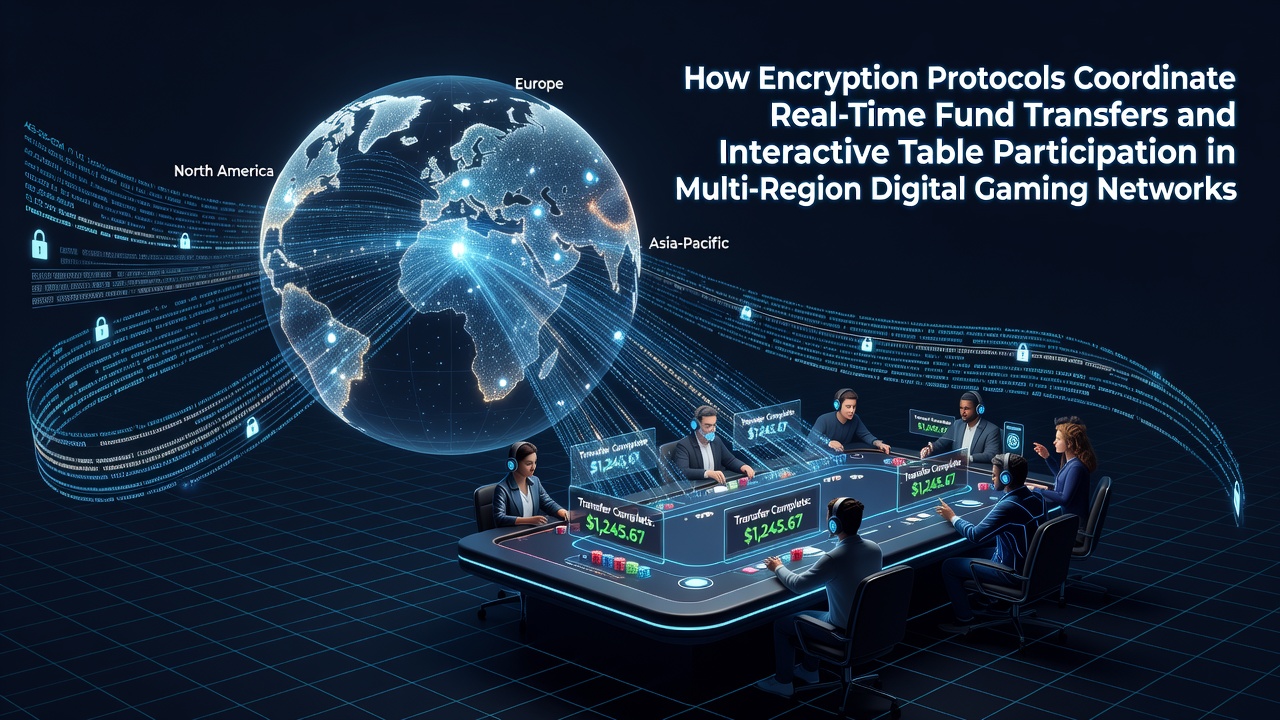
Encryption protocols form the backbone of secure operations in multi-region digital gaming networks where real-time fund transfers intersect with interactive table participation, and these systems rely on layered cryptographic standards to maintain data integrity across borders. Data from industry reports shows that platforms handling live dealer sessions and instant deposits use Transport Layer Security versions 1.3 combined with Advanced Encryption Standard 256-bit keys to protect transaction payloads while they move between regional servers and player devices. Such coordination allows funds to clear in under two seconds even when a player in one jurisdiction joins a table hosted in another.
Core Mechanisms Behind Secure Transfers
Real-time fund movements depend on application programming interfaces that embed encryption at multiple stages including authentication, authorization, and settlement, and researchers at technical institutions have documented how these APIs prevent interception during peak activity periods. When a deposit request originates from a mobile app, the protocol suite generates session keys that rotate every few minutes while also enforcing mutual certificate validation between the payment gateway and the gaming operator. Observers note that this process aligns with standards outlined by the Nevada Gaming Control Board which requires all electronic transfers in licensed operations to meet specific cryptographic benchmarks.
Multi-region networks add another layer because latency differences and local data residency rules must coexist with uniform security, and studies indicate that operators deploy edge computing nodes equipped with hardware security modules to handle regional compliance without slowing global table synchronization. For instance a player depositing from Singapore while seated at a virtual table routed through European infrastructure experiences seamless encryption handoffs managed by distributed key management systems. Those who've examined traffic logs report that packet inspection tools flag anomalies within milliseconds, triggering automatic session termination if patterns suggest tampering.
Interactive Table Participation and Protocol Integration
Live table environments demand continuous encryption streams for video feeds, chat functions, and bet placements because any delay can disrupt gameplay flow, and data indicates that protocols such as Secure Real-time Transport Protocol handle audio-visual components while separate channels manage financial actions. Coordination occurs through centralized orchestration servers that assign unique encryption contexts to each participant, ensuring that a wager placed in one time zone updates the shared table state without exposing sensitive details. Experts have observed that September 2026 saw several operators upgrade to post-quantum cryptography pilots in response to emerging regulatory guidance from bodies like the Malta Gaming Authority.

Table participation further relies on tokenization techniques where player balances convert into temporary session tokens that carry encrypted metadata about available funds, and this approach reduces exposure during the brief windows when bets are confirmed. Researchers discovered that combining tokenization with end-to-end encryption lowers breach risks by limiting plaintext data availability to only the originating device and the settlement processor. What's significant is how these methods scale across continents while still satisfying varying legal requirements for player verification and transaction logging.
Regional Variations and Synchronization Challenges
Different jurisdictions impose distinct rules on data encryption strength and retention periods, yet operators maintain unified protocols through modular architecture that swaps regional modules without altering core game logic. According to figures from the Australian Communications and Media Authority, compliance audits in recent years have highlighted successful cross-border implementations where encryption key exchanges follow standardized formats like those in the ISO 27001 framework. Such setups prevent fund transfer failures even when regulatory updates occur in one market while others remain stable.
Interactive sessions benefit from this flexibility because table state replication uses encrypted multicast channels that deliver updates to all connected clients simultaneously, and one study revealed that average packet loss rates stay below 0.1 percent when these protocols operate under optimal conditions. People who've monitored network performance across platforms find that fallback mechanisms activate automatically if primary encryption paths encounter regional firewall interference, rerouting traffic through alternate secure tunnels within milliseconds.
Conclusion
Encryption protocols continue to evolve as the foundation for reliable coordination between fund transfers and live table activities in expansive digital gaming networks, and ongoing advancements in key distribution and anomaly detection support their expansion into additional markets. Data shows that adherence to established cryptographic standards enables operators to deliver consistent experiences regardless of geographic separation while meeting diverse regulatory expectations. As networks grow in scale, the same principles of layered security and real-time synchronization remain central to operational continuity.